ΗΧΗΤΙΚΕΣ ΑΤΜΟΣΦΑΙΡΕΣ ΚΑΙ (ΚΛΕΙΣΤΟΙ) ΧΩΡΟΙ
Νικολά Ρεμί
Για λόγους ασφάλειας η πλατφόρμα σάς ανακατεύθυνε αυτόματα στην αρχική σελίδα για να συνδεθείτε ξανά.
This course examines the qualitative dimensions of sonic environments and explores how these dimensions can inform architectural and urban design. It is grounded in the field of architectural and urban atmospheres, considering sound as a sensitive, relational and dynamic component of spatial experience.
The first part of the course introduces key theoretical frameworks for understanding ambiance: the notion of ambiance, the concepts of soundscape, milieu and environment, as well as the notions of sound objects and sonic effects. Particular attention is given to the work of Tim Ingold and Bruno Latour, whose approaches invite us to consider space as a network of relations between human and non-human actors and to understand environments as evolving processes rather than static settings.
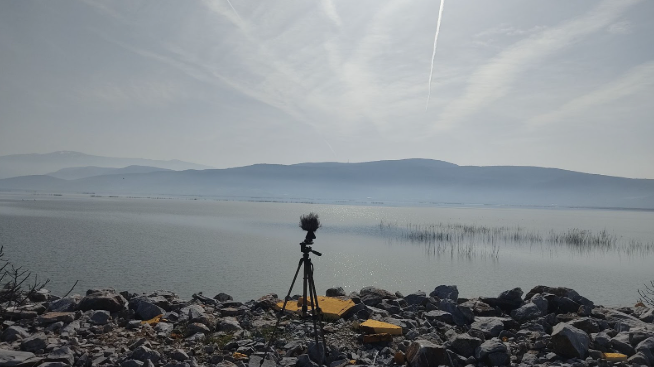
The course combines theoretical reflection with practical experiments in field recording, sound editing and sound diffusion, using different types of microphones and sound diffusion systems. Exercises take place each year on sites located outside the campus, where students engage with real situations of ambiance analysis and design. These field investigations address contemporary environmental challenges related to climate change.
Through listening, recording and interpreting sonic phenomena, students are encouraged to question the sensory dimension of environmental transformations: How does the world sound today? How does climate change reshape the sonic atmospheres of our environments?
---
Το μάθημα εξετάζει τις ποιοτικές διαστάσεις των ηχητικών περιβαλλόντων και διερευνά πώς αυτές μπορούν να συμβάλουν στον αρχιτεκτονικό και αστικό σχεδιασμό. Εντάσσεται στο πεδίο της έρευνας για τις αρχιτεκτονικές και αστικές ατμόσφαιρες, προσεγγίζοντας τον ήχο ως μια αισθητηριακή, σχεσιακή και δυναμική συνιστώσα της εμπειρίας του χώρου.
Το πρώτο μέρος του μαθήματος παρουσιάζει βασικά θεωρητικά πλαίσια για την κατανόηση της ατμόσφαιρας: την έννοια της ατμόσφαιρας, τις έννοιες του ηχοτοπίου, του μέσου και του περιβάλλοντος, καθώς και τις έννοιες των ηχητικών αντικειμένων και των ηχητικών εφέ. Ιδιαίτερη έμφαση δίνεται στα έργα των Tim Ingold και Bruno Latour, τα οποία προτείνουν να κατανοούμε τον χώρο ως δίκτυο σχέσεων μεταξύ ανθρώπινων και μη ανθρώπινων παραγόντων και το περιβάλλον ως μια διαρκώς μεταβαλλόμενη διαδικασία.
Το μάθημα συνδυάζει θεωρητική προσέγγιση με πρακτικές ασκήσεις ηχογράφησης πεδίου, επεξεργασίας και διάχυσης ήχου, χρησιμοποιώντας διαφορετικούς τύπους μικροφώνων και συστήματα ηχητικής διάχυσης. Οι ασκήσεις πραγματοποιούνται κάθε χρόνο σε τοποθεσίες εκτός του πανεπιστημιακού χώρου, όπου οι φοιτητές έρχονται αντιμέτωποι με πραγματικές καταστάσεις ανάλυσης και σχεδιασμού ατμοσφαιρών. Τα πεδία αυτά επιτρέπουν την προσέγγιση σύγχρονων ζητημάτων που σχετίζονται με τις περιβαλλοντικές μεταβολές και την κλιματική αλλαγή.
Μέσα από την ακρόαση, την καταγραφή και την ερμηνεία των ηχητικών φαινομένων, οι φοιτητές καλούνται να διερευνήσουν τη βιωματική διάσταση των μετασχηματισμών του περιβάλλοντος: Πώς ηχεί ο κόσμος σήμερα; Πώς μετασχηματίζει η κλιματική αλλαγή τις ηχητικές ατμόσφαιρες των τόπων;
ΛιγότεραThis course examines the qualitative dimensions of sonic environments and explores how these dimensions can inform architectural and urban design. It is grounded in the field of architectural and urban atmospheres, considering sound as a sensitive, relational and dynamic component of spatial experience.
The first part of the course introduces key theoretical frameworks for understanding ambiance: the notion of ambiance, the concepts of soundscape, milieu and environment, as well as the notions of sound objects and sonic effects. Particular attention is given to the work of Tim Ingold and Bruno Latour, whose approaches invite us to consider space as a network of relations between human and non-human actors and to understand environments as evolving processes rather than static settings.
The course combines theoretical reflection with practical experiments in field recording, sound editing and sound diffusion, using different types of microphones and sound diffusion systems. Exercises ta
This course examines the qualitative dimensions of sonic environments and explores how these dimensions can inform architectural and urban design. It is grounded in the field of architectural and urban atmospheres, considering sound as a sensitive, relational and dynamic component of spatial experience.
The first part of the course introduces key theoretical frameworks for understanding ambiance: the notion of ambiance, the concepts of soundscape, milieu and environment, as well as the notions of sound objects and sonic effects. Particular attention is given to the work of Tim Ingold and Bruno Latour, whose approaches invite us to consider space as a network of relations between human and non-human actors and to understand environments as evolving processes rather than static settings.
The course combines theoretical reflection with practical experiments in field recording, sound editing and sound diffusion, using different types of microphones and sound diffusion systems. Exercises ta
Ημερολόγιο
Ανακοινώσεις
- - Δεν υπάρχουν ανακοινώσεις -